

£40m For Caribbean Green Energy Schemes. 5.6 Million British Homes Going Hungry. Charity Begins At Home?

Andy Burnham is sending £40m over three years to Caribbean infrastructure, including renewable energy. At home, the typical energy bill is £1,723 a year and 5.6 million low-income households are going hungry.

By Travis Cook, The Great Climate Con. Built on reporting by The Telegraph and The Independent.

Families across Britain are heading into winter counting every pound. Heating or eating. Pay the bill or pay the rent.

And on Tuesday the Prime Minister stood up in Antigua and handed out £40m.

Not for British homes. For Caribbean infrastructure, including renewable energy schemes.

Here’s what he’s paying for abroad, and what he’s leaving behind at home.

The pledge

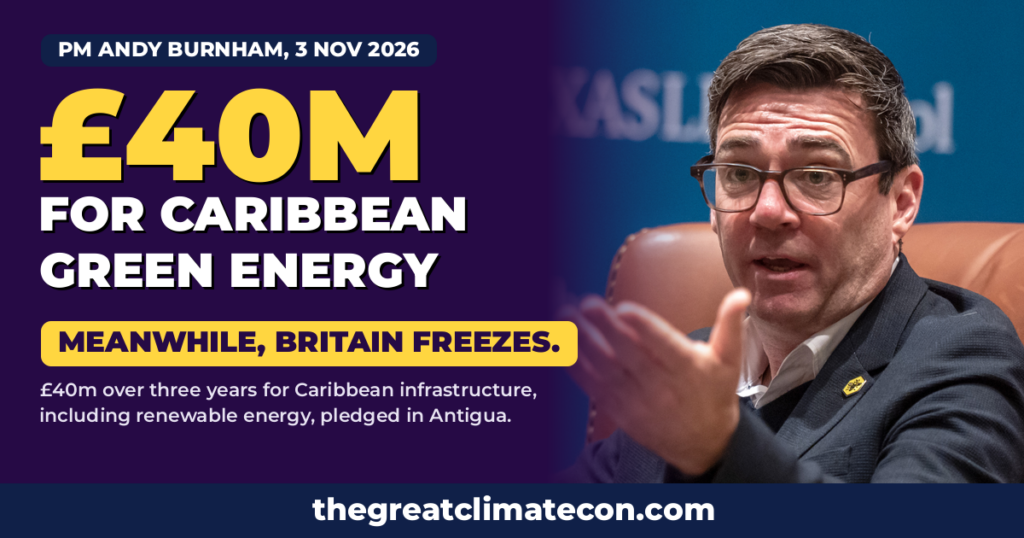
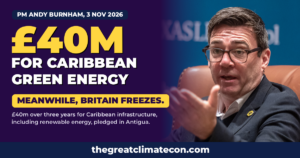
£40m over three years, announced in Antigua

Andy Burnham has been Prime Minister since 20 July 2026. His first Commonwealth summit opened in St John’s, Antigua, on 3 November (UK Parliament).

The Telegraph reports that Britain “will allocate £40m during the next three years towards critical infrastructure in the Caribbean, including renewable energy”, plus technical assistance to help Caribbean countries attract investment. Downing Street told PA the money is to speed up critical infrastructure, “including green energy schemes”. Reuters confirms the £40 million over three years.

Pledged to Caribbean infrastructure
£ 40 m
Years it's spread over
3
Commonwealth nations at the summit
56

All of it lands alongside a promised “debt reset” for poorer Commonwealth members and talks on a formal apology for the slave trade (BBC News).

Your bills

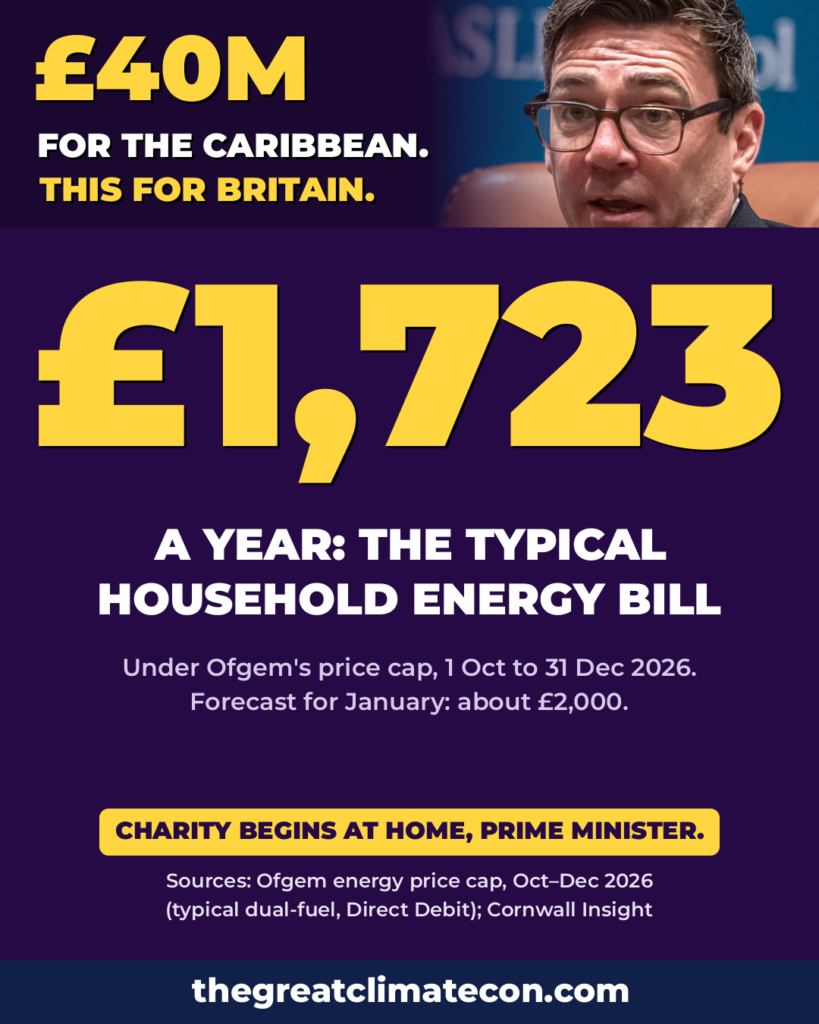
The typical bill is £1,723. January could be about £2,000

From 1 October, Ofgem’s price cap for a typical household paying by direct debit rose 4%, from £1,663 to £1,723 a year.

It doesn’t stop there. Cornwall Insight’s forecast for the January to March cap is £1,999.28. That’s about £276 more on the typical bill, just as the heating goes on.

Typical bill a year, Oct to Dec 2026
£ 1723
Cornwall Insight's January forecast
£ 1999

Uswitch says forecasters expect a rise of around 22% in January. And families have no buffer left: only 55% of billpayers are in credit this year, down from 64% in 2022.

The kitchen table

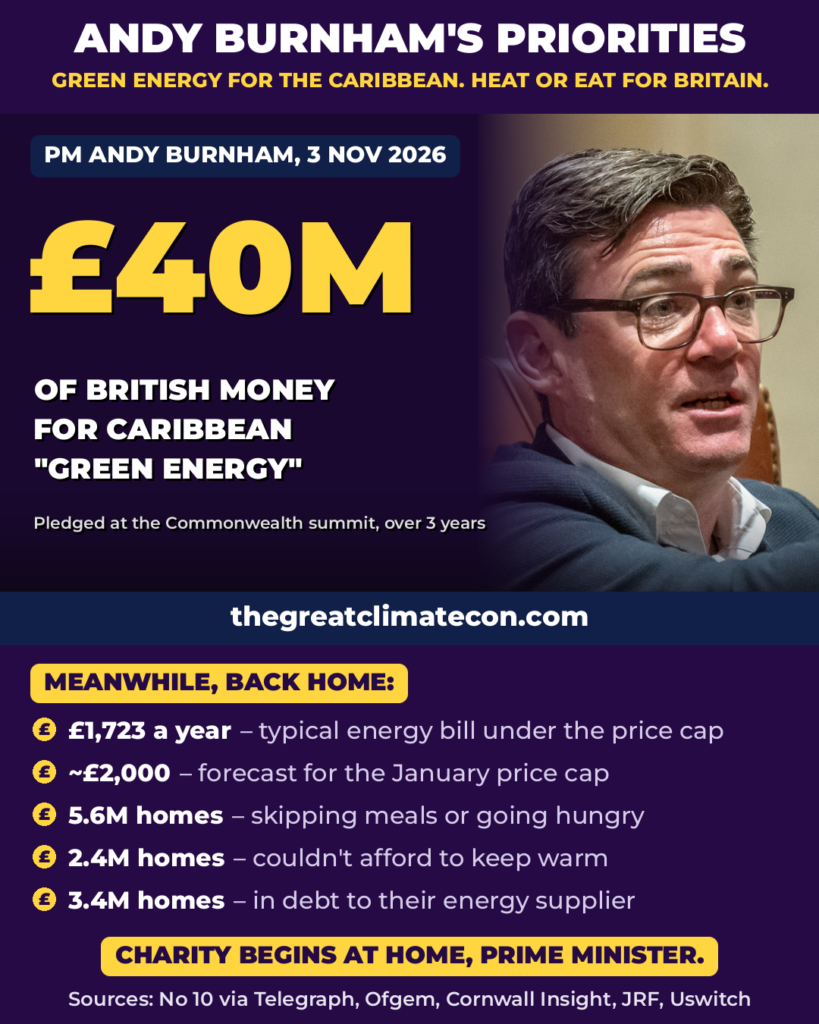
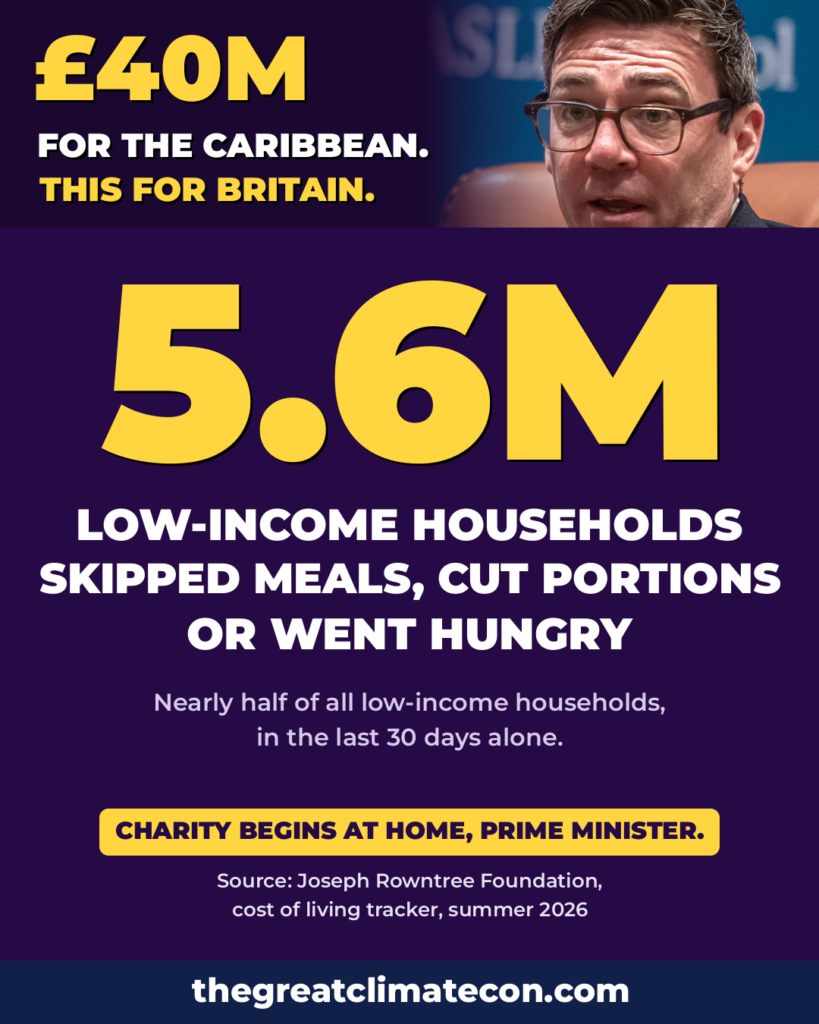
5.6 million low-income households are going hungry

The Joseph Rowntree Foundation surveyed low-income households in May and June. Almost half, 47%, had gone hungry, cut the size of meals or skipped meals in the last 30 days because they couldn’t afford food. That’s 5.6 million households.

JRF puts the number unable to afford at least one essential item at 7.4 million, the highest since its tracker began in 2021. And 1.5 million households used a food bank in the last six months (JRF).

Homes going hungry
5.6 M
Of low-income homes
47 %
Can't afford essentials
7.4 M
Used a food bank
1.5 M

Energy bills are eating the food budget too. One in twelve billpayers plan to spend less on food this winter to cover their energy costs.

The cold

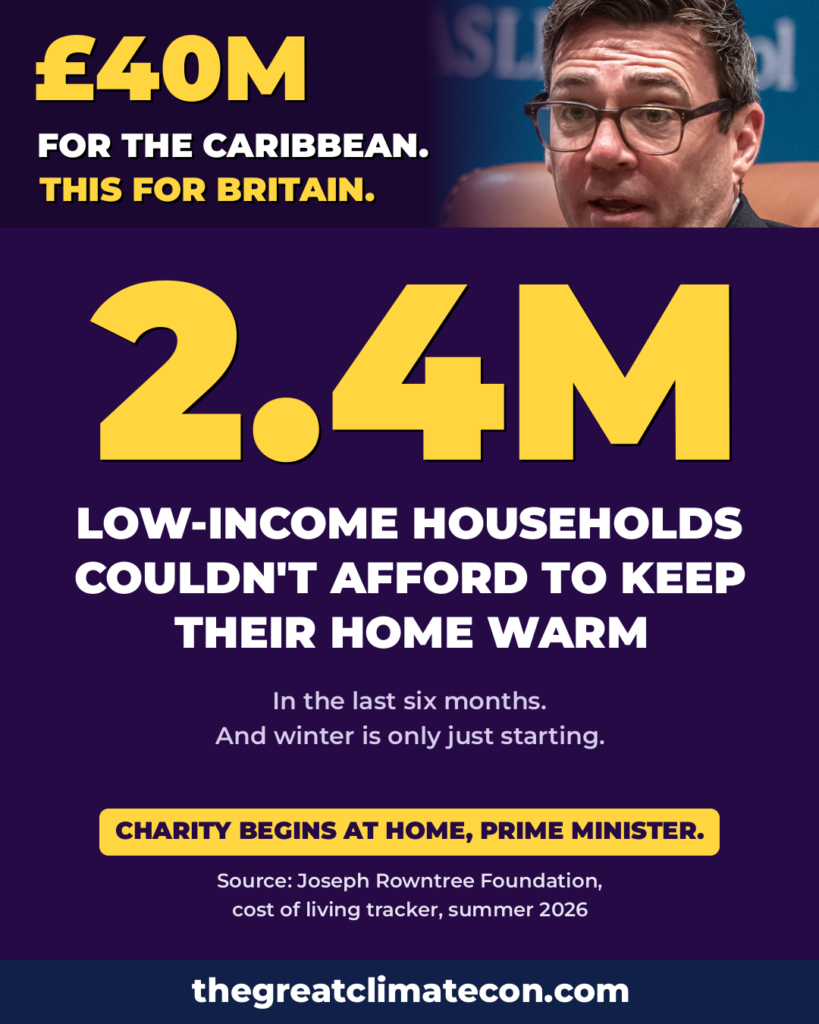
2.4 million low-income households can't keep warm

In May, around 2.4 million low-income households had not been able to keep their home warm in the last six months because they couldn’t afford it. Of those who heated their home less than they needed, 42% have been doing it for more than two years.

The government’s own figures say the same. In England alone, 2.36 million households, 9.4%, were in fuel poverty in 2025.

Low-income homes that can't keep warm
2.4 M
Fuel poor households, England, 2025
2.36 M
Spending over 10% of income on energy
13.5 M

Campaigners at the End Fuel Poverty Coalition say 13.5 million households in Great Britain now spend more than 10% of their income on energy. And 43% of billpayers plan to wear extra clothes rather than turn the heating on (Uswitch).

The debt

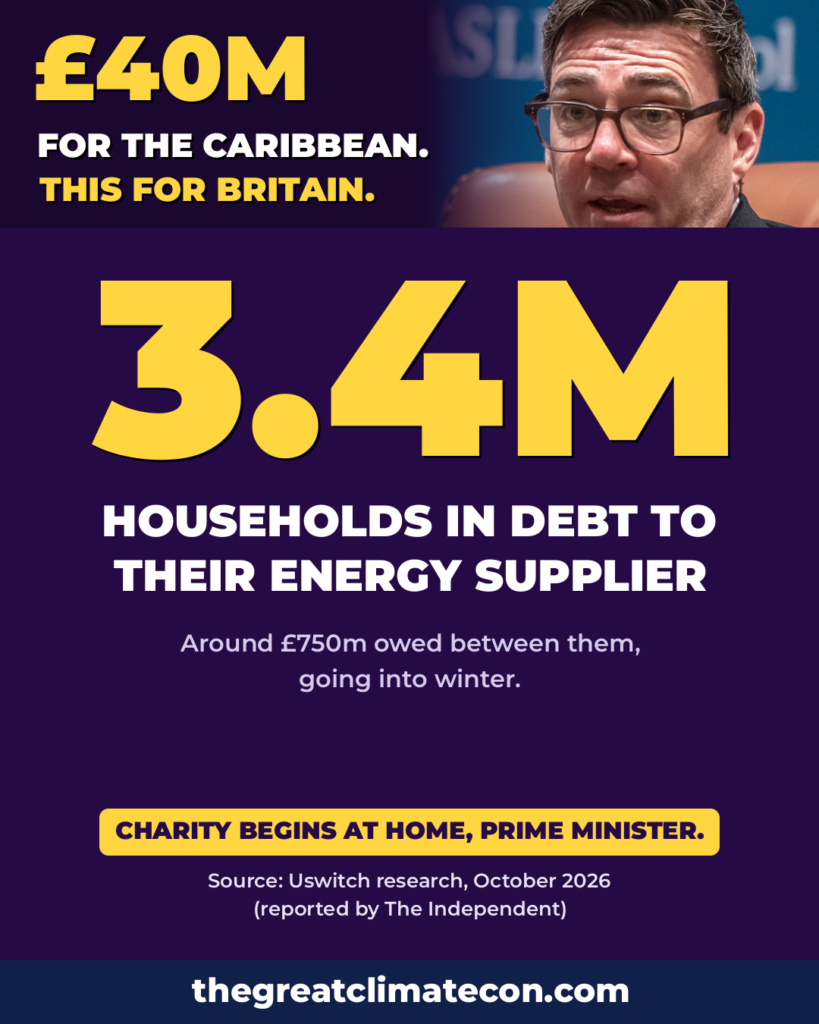
3.4 million households owe their energy supplier

Uswitch research reported by The Independent puts 3.4 million households, nearly one in eight, in debt to their energy supplier. Together they owe about £750m, an average of £220 each.

Two thirds of them have been chased by their supplier. Only about one in eight say they got help to set up a repayment plan.

Households in energy debt
3.4 M
Owed between them
£ 750 m
Average debt per household
£ 220

Run the numbers. £40m would clear that average £220 debt for about 180,000 British households (our arithmetic). The Prime Minister chose the Caribbean.

The hypocrisy

He promised breathing space at home. The cheque went abroad

When he took office, Burnham talked of the need to “do something to make life more affordable, to put more money in people’s pockets, to give people more breathing space again”.

Three months on, the breathing space is going to Caribbean infrastructure, including green energy schemes about 4,000 miles away.

His own regulator says what’s driving your bill. Ofgem puts this winter’s rise down to higher wholesale gas prices. The answer for British families is cheaper energy here. Not renewable schemes on the other side of the Atlantic.

This is the same government that treats net zero as untouchable while bills climb. We’ve shown where that leads in Renewable Energy Is Causing Fuel Poverty For Millions In The UK.

The objection

"But that's just £40m. It's small change"

Small change to a Prime Minister. Not to the families on the end of it.

January’s forecast rise is about £276 on the typical bill. £40m would cover that rise for about 145,000 households (our arithmetic). Or it would wipe out the average energy debt for about 180,000.

And the size was never the point. The point is the order of the queue. Families are skipping meals and sitting in cold homes, and the first cheque the Prime Minister waves on the world stage is for someone else’s energy.

Every pound of it is British taxpayers’ money. Charity begins at home.

More: Net Zero And Renewables Bringing Britain To The Brink Of An Energy Crisis

The bottom line

The bottom line

For the real cost of the green agenda at home, read Net Zero To Cost UK £803 Billion By 2050.

Figures marked “our arithmetic” are worked out from the sources below: £40m ÷ 3 years; £40m ÷ £276 (Cornwall Insight’s £1,999.28 minus Ofgem’s £1,723); £40m ÷ £220 (Uswitch’s average debt).

Want to win the “green aid” argument every time? Unlock every lesson, book and course in The Climate Con Learning Centre. Join the membership or support the work.

Books, plus the free e-book Rich in Energy, Poor in Policy.

The Advanced Guide To The Climate Con

The Beginners Guide To The Climate Con

Continue Your Learning

Continue your learning at Thegreatclimatecon.com

📊

Track The Cost Of Net Zero

Stay ahead of the transition with real-time cost monitoring and optimization tools.

Access Cost Trackers →

Leave a Comment