



Net Zero Is Mathematically Impossible
Not only the logic but the numbers don’t add up either
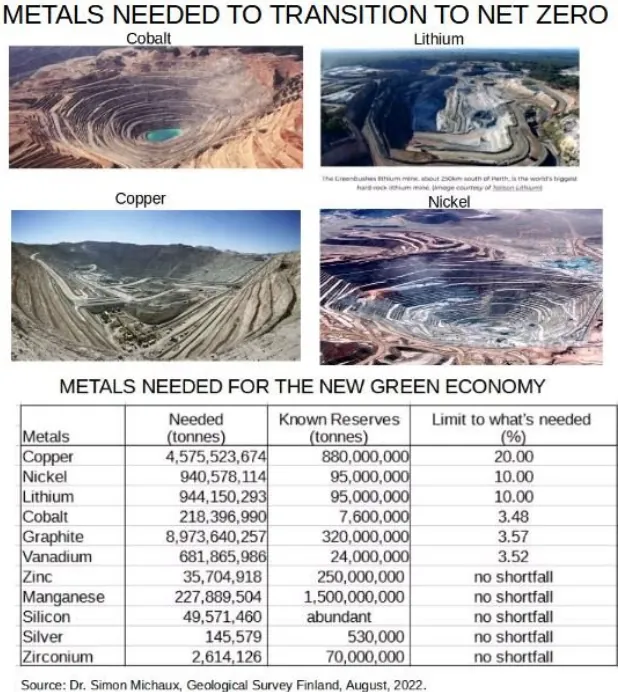
In August 2022, Dr. Simon Michaux created a geological survey that destroys any feasibility in net zero, if there ever was any! The numbers are eye-opening: over 4.5 billion tonnes of copper needed versus just 880 million in reserves, equating to only 20% of what’s required. Similar shortfalls appear for nickel (10%), lithium (10%), cobalt (3.48%), graphite (3.57%), and vanadium (3.52%). Michaux’s detailed report on the quantity of metals for one generation of renewable technology, painted a picture of an insurmountable resource barrier. Three years later, in 2025, with the world pushing harder toward net zero targets, these figures remain a damning indictment. But as we’ll explore, the problem runs deeper: net zero isn’t just impractical, it’s mathematically impossible, built on a foundation of beneficial CO2 denial and a scam designed to siphon wealth from the working class to the elite.
Below is an excellent presentation from Simon speaking at the Sustainable Minerals Institute.
The Resource Crunch: Numbers That Don’t Add Up Michaux’s calculations were based on phasing out hydrocarbons entirely by manufacturing one generation of renewable units, wind turbines, solar panels, batteries, and electric vehicles (EVs), to meet global energy demands. For copper alone, the backbone of electrical infrastructure, the report estimated a need for 4.58 billion tonnes. Known reserves at the time? A mere 880 million tonnes. Fast-forward to 2025, and the U.S. Geological Survey’s Mineral Commodity Summaries confirm global copper reserves hover around 890 million tonnes, with total identified resources (including undiscovered) estimated at 2.3 billion tonnes.
Yet, to achieve net zero by 2050 under the International Energy Agency’s (IEA) scenarios, copper demand could quadruple, requiring cumulative production of over 1 billion tonnes by mid-century. The story repeats for other critical metals. Lithium reserves stand at about 98 million tonnes in 2025, but net zero pathways demand up to 200 million tonnes by 2050 for batteries alone. Nickel reserves are around 100 million tonnes, yet projections call for 1.5-2 times that amount. Cobalt, essential for EV batteries, has reserves of just 8.3 million tonnes, while graphite, key for anodes, sits at 340 million tonnes, far short of the billions needed for widespread electrification.
Michaux’s report highlighted that even at peak mining rates, extracting these volumes would take centuries, not decades. A 2025 analysis from the Energy Transitions Commission echoes this, noting that while geological resources exist, extraction rates, environmental regulations, and supply chain bottlenecks make rapid scaling impossible.
The Climate Scam: A Trojan Horse for Wealth Redistribution
This Story Is Funded By Readers Like You
The Advanced Guide To The Climate Con
The Beginners Guide To The Climate Con
Continue Your Learning

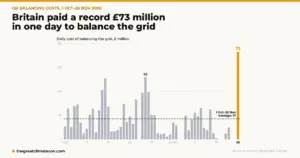
£73 Million In One Day: Britain Paid Wind Farms To Switch Off, Then Paid Gas Plants To Switch On
Ofgem’s price cap rises 26% on 1 January, taking the typical bill from £1,723 to £2,166. Here is what is really in your bill, from levies and CfDs to carbon taxes, and why our own North Sea gas is the way out.
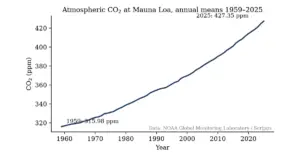
Why We Want More CO₂
Carbon dioxide is plant food. As it has risen, the planet has been getting greener, harvests have grown, and cold still kills far more people than heat. Here is the short version of the evidence.
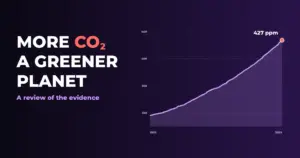
More Carbon Dioxide, a Greener Planet: A Review of the Evidence for the Benefits of Rising Atmospheric CO₂
More Carbon Dioxide, a Greener Planet: A Review of the Evidence for the Benefits of Rising Atmospheric CO₂ Carbon dioxide is the raw material of
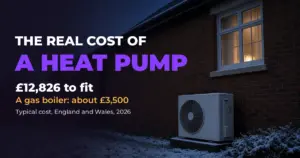
The Real Cost Of Swapping Your Boiler For A Heat Pump

Price Cap Up 26%: Your Energy Bill Jumps £443 From January, And North Sea Gas Is The Answer
Ofgem’s price cap rises 26% on 1 January, taking the typical bill from £1,723 to £2,166. Here is what is really in your bill, from levies and CfDs to carbon taxes, and why our own North Sea gas is the way out.
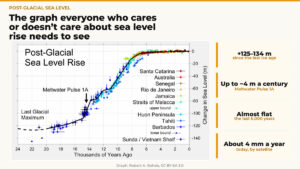
The graph everyone who cares or doesn’t care about sea level rise needs to see
After the last ice age, global sea level rose by 125–134 metres. For the last 6,000 years the curve has been almost flat. Today’s satellite rate is about 3.4 to 4.4 millimetres a year.

Track The Cost Of Net Zero
Stay ahead of the transition with real-time cost monitoring and optimization tools.
Access Cost Trackers →
Climate Con Common Sense
Available in hardcopy

The Beginners Guide
Available in hardcopy