


Solar Installations Being Paid To Switch Off
Build endless solar panels and then pay them to switch off, madness!
Just when you thought this entire push for endless solar panels couldn’t get anymore insane we have yet another story break that makes the entire agenda even more crazy. Yes, that’s right folks, solar installations are now being paid to switch off. Over £100,000 to switch off between February and June of 2025.
Why are doing this to ourselves? There is abundant hydrocarbons around the world for us to still use not including our own reserves. Then there is promising developments in SMR technology. We do not need to be destroying prime farmland and now even waterways just to then have them then be sitting there doing nothing! All of this is already happening before we get anywhere with the sun dimming experiments.
Solar Following Wind In Draining Taxpayer Money For Doing Nothing
The Renewable Energy Foundation (REF) flagged that five solar farms pocketed £102,500 to cut 3.6 gigawatt hours between February and June. REF’s director, John Constable, nails the issue: these payments, alongside £200 billion in renewable subsidies since 2002 (roughly £8,000 per household), are ballooning energy costs. He argues that renewables should be self-sustaining by now, not leaning on subsidies or constraint payments, which drive the UK’s sky-high energy prices. This resonates with our view that the rush to renewables ignores practical energy needs and the benefits of reliable, CO2-emitting sources like natural gas, which don’t require such wasteful interventions and have been wrongfully demonised.
NESO and the Department for Energy Security and Net Zero defend the payments, claiming they’re working on grid upgrades to minimise constraints. But upgrades are costly, and guess who’ll foot that bill? Consumers, again. Shadow Energy Secretary Claire Coutinho calls out the hypocrisy of promising £300 bill cuts while paying renewables to idle, projecting a tripling of wind farm constraint costs by 2030. This underscores the flawed logic of prioritising climate targets over affordable energy, a point we’d argue is rooted in an overblown fear of CO2—a molecule essential for plant growth and food security.
Octopus’s push for zonal pricing, where energy prices reflect regional supply and demand, could reduce constraint payments by incentivising better-placed infrastructure. It’s a market-driven idea worth exploring, but it doesn’t address the core issue: the net zero agenda’s reliance on intermittent renewables. From our perspective, this article exposes a system where ideology trumps economics, jacking up costs while sidelining CO2’s role in a balanced, affordable energy mix. It’s a case study in why we need to rethink energy policy with pragmatism, not dogma.
Solar Panels On Top Of School Building Catch Fire
If only there was some cheap reliable abundant source of energy we could tap into that doesn’t need to be paid to switch off and doesn’t put the education of primary school children at risk!?
Continue Your Learning

36-Year High: They Said The Great Barrier Reef Was Dying. Then It Recorded The Most Coral Since Monitoring Began
In 2022 Australia’s official reef monitors recorded the most coral on the northern and central Great Barrier Reef in 36 years. Ten years earlier, the forecast was 5–10%.
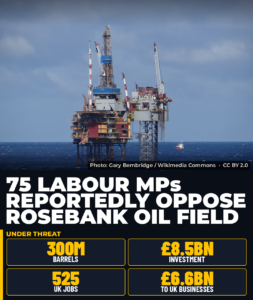
75 Labour MPs Reportedly Want 300 Million Barrels Of British Oil Left In The Ground. So We Just Import It Instead?
A reported 75 Labour MPs have signed a letter against Rosebank, around 300 million barrels of oil west of Shetland. Stop it and Britain loses £8.5bn of investment and 525 UK jobs, and still buys the oil, just from abroad.
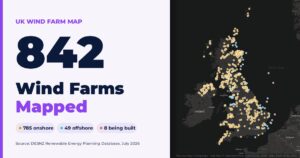
Wind Farm Map UK
Every operational UK wind farm on one map: 834 sites and 31,519 MW (31.5 GW) from the government’s DESNZ Renewable Energy Planning Database, July 2026 extract.

What Is A Photochrom?
A photochrom is a colour ink print made from a black-and-white photograph, produced and sold mainly from the 1890s to the 1910s. That is why these views are such useful dated evidence of historic coasts.

17.2 Million Trees, 8,611 Hectares, And That’s Only Public Land
Forestry and Land Scotland recorded 8,611 hectares felled for wind farms on Scotland’s national forest since 2000, about 17.2 million trees. Private forests are not included.

Britain Demolished Its Backup: 34 GW of Reliable Power Gone While China Built 1,052 GW of Coal
Britain closed 33.9 GW of coal and oil plant from 21 stations now demolished, being pulled down, or otherwise taken off the grid. In the same years China commissioned 1,052 GW of new coal, about 31 times as much. When transmission-metered wind averaged just 0.60 GW on 8 November, the grid leaned on gas and paid emergency prices.
Track The Cost Of Net Zero
Stay ahead of the transition with real-time cost monitoring and optimization tools.
Access Cost Trackers →