
What The Net Zero Lesson Tells Children
The lesson is a Key Stage 3 page called simply “Net zero”, in the Sustainability (Wales) section. It opens by telling pupils the aim is to keep the planet “at a comfortable temperature”. Then it drops the science and starts handing out instructions:
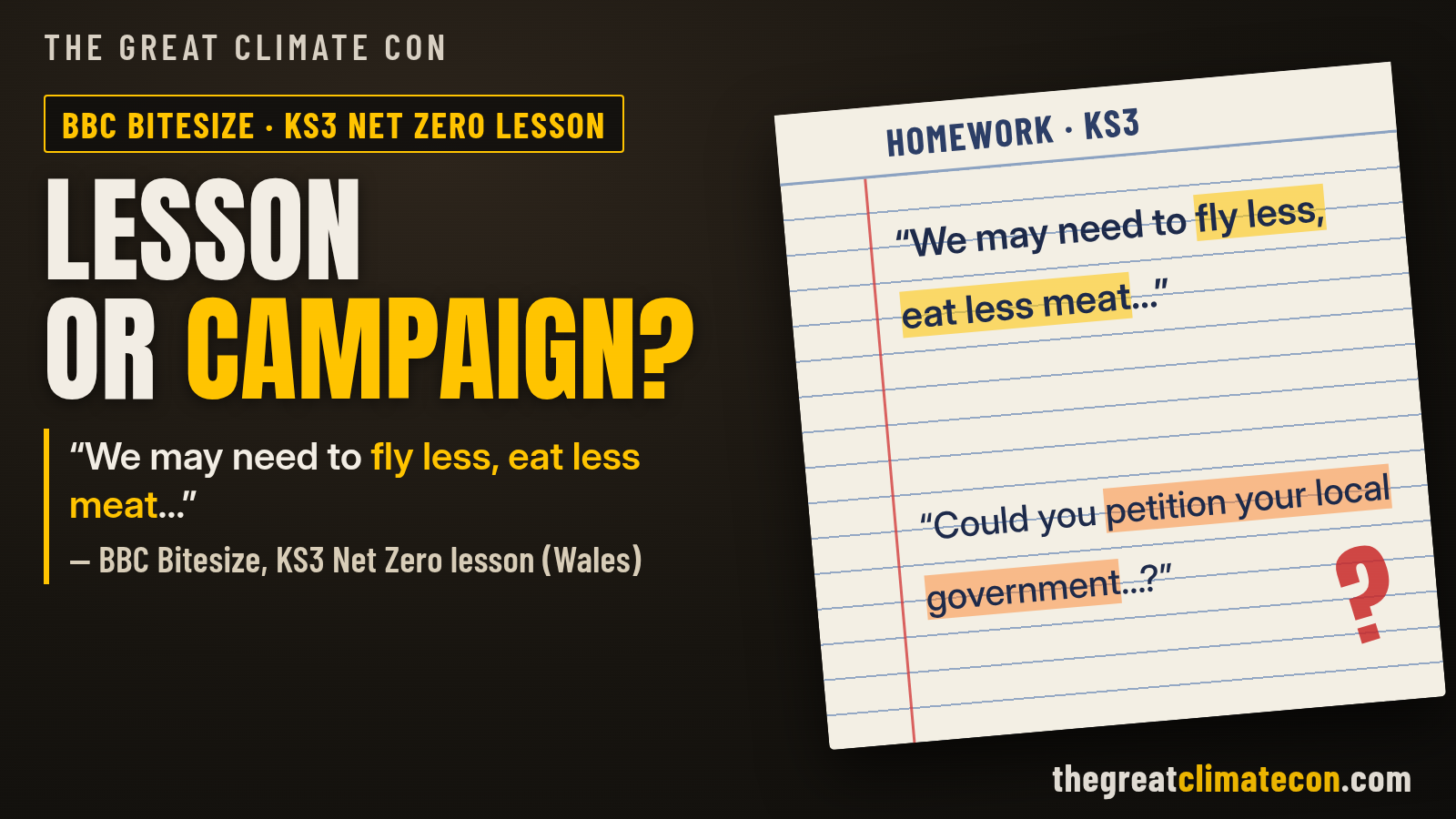
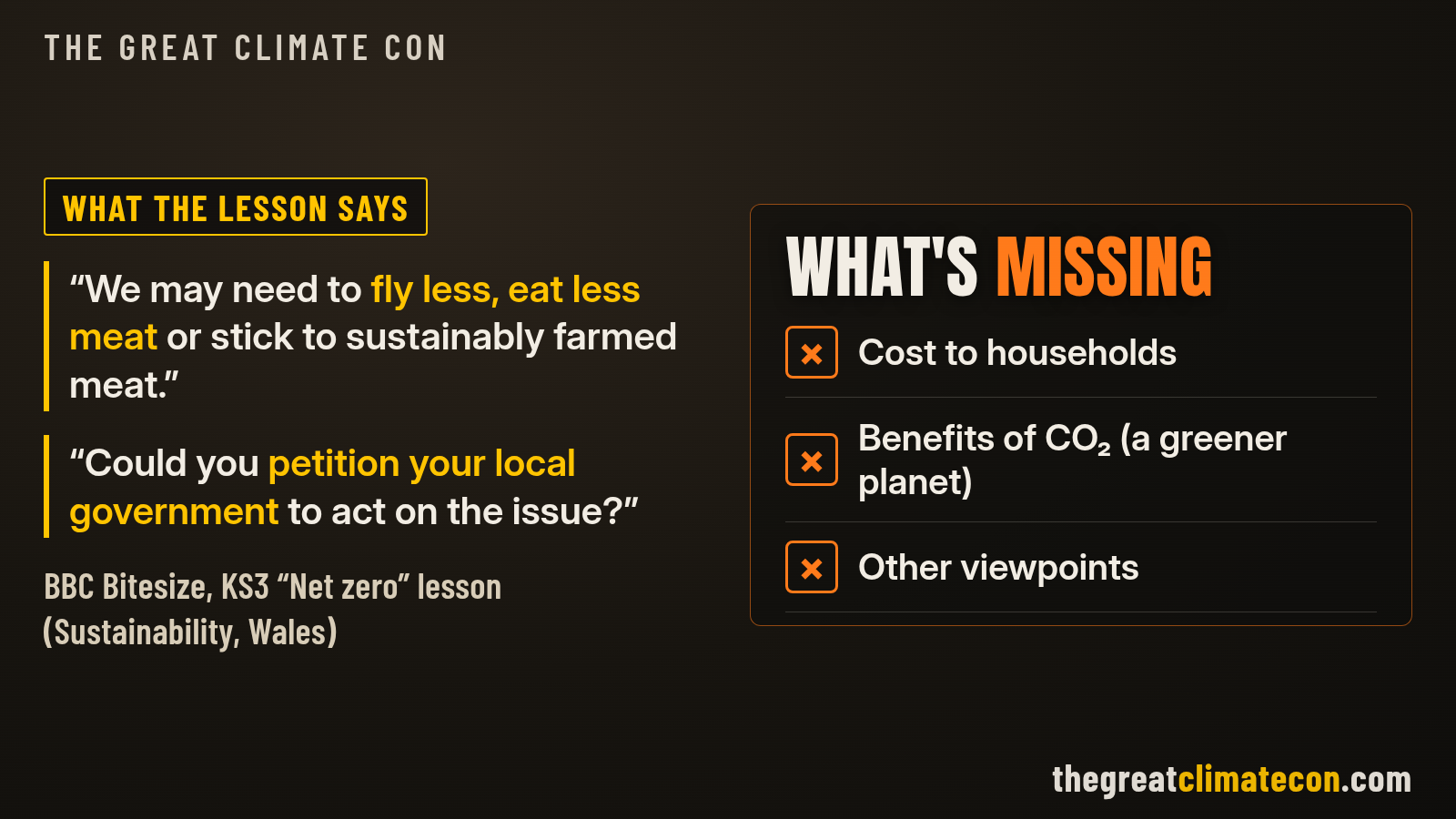
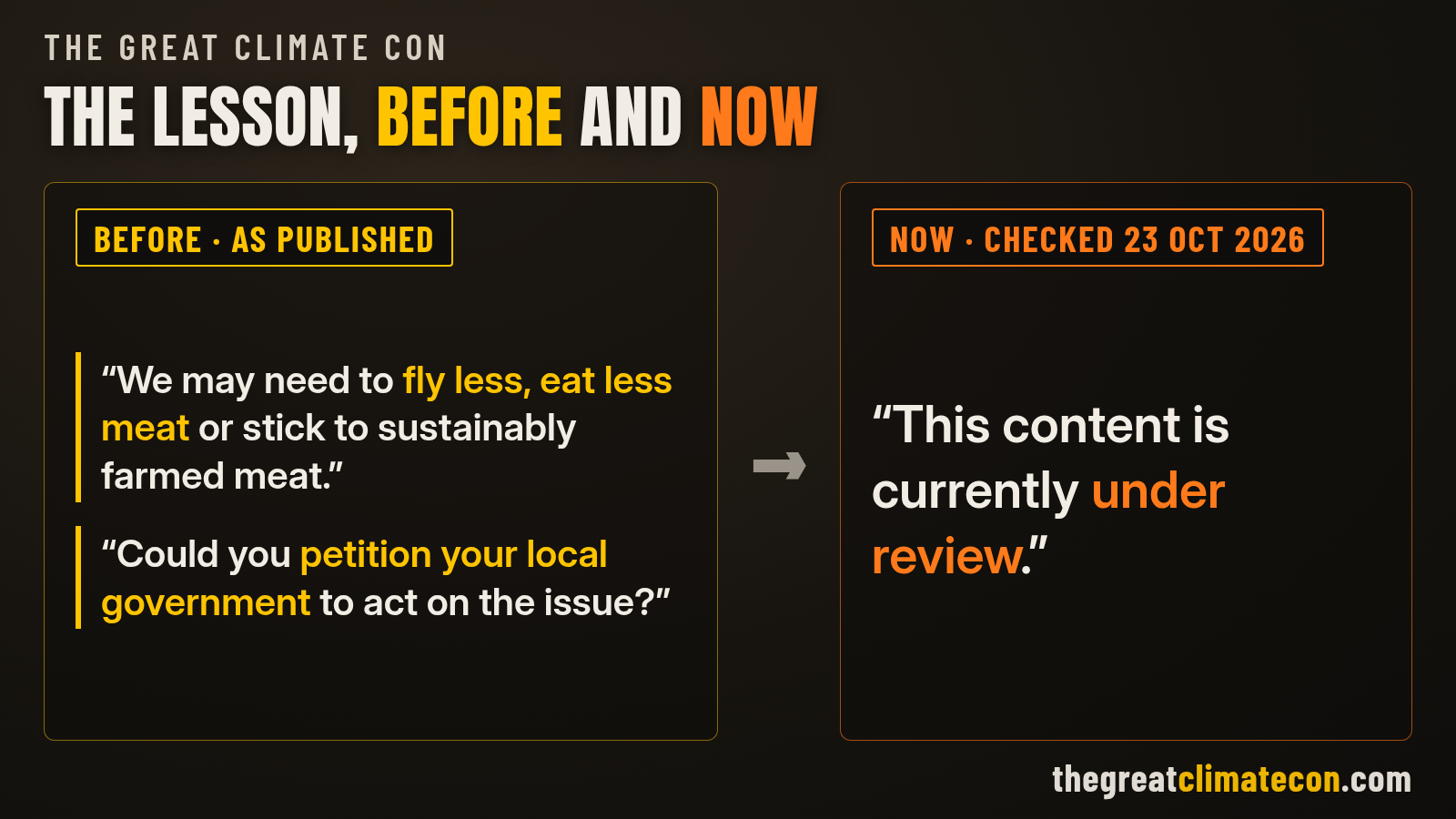
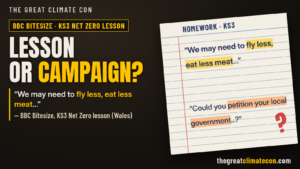
“For us to reach net zero in Wales, we’ll have to do things differently. We may need to fly less, eat less meat or stick to sustainably farmed meat.”
BBC Bitesize, KS3 “Net zero”
The accompanying video goes further. It runs through recycling, cycling, zero waste shops and eating less meat, then issues the call to arms: “Could you petition your local government to act on the issue?”
The page signs off with pure sales copy: “Everyone has a part to play, and the quicker we act, the quicker we will reduce the effects of climate change.” Net zero, it promises, “will also lead to cleaner air, nicer public spaces and healthier ways of travelling and eating.”
The Facts The BBC Left Out
Look for a price tag and you won’t find one. So here it is. The Climate Change Committee’s own net zero pathway needs £1.4 trillion of investment and operating costs by 2050. The Office for Budget Responsibility ran the numbers and found that, in its reference scenario, reaching net zero adds £469 billion, or 21% of GDP, to the national debt by 2050-51 (OBR Fiscal Risks Report, July 2021). That is the bill these eleven-year-olds will be paying off as adults.
“Eat less meat” isn’t an abstract idea in Wales, either. The Welsh Government’s own commissioned modelling of its farm scheme proposals forecast 122,000 fewer livestock units (a 10.8% cut), 11% less farm labour and a £199 million hit to farm business income (Senedd Research, 2024). In February 2024 thousands of farmers descended on the Senedd in protest, and the plan to force 10% tree cover onto every farm was later dropped. None of that made it into a lesson aimed at Welsh children, many of them the sons and daughters of farmers.
And a “comfortable temperature”? The biggest study of its kind, covering 74 million deaths in 13 countries, found cold kills around 17 times more people than heat. In the UK, 8.48% of deaths were linked to cold against just 0.30% to heat (Gasparrini et al., The Lancet, 2015). Warmth isn’t what threatens British children. A cold home their parents can’t afford to heat is.
As for “cleaner air”, CO₂ is not air pollution. It is an invisible, odourless gas that every plant on Earth needs to live. Lumping it in with smog is one of the oldest tricks in the climate playbook, and Bitesize played it on children.
Even Sir Keir Starmer has said, as the Mail on Sunday points out, that tackling climate change “does not mean telling people how to run their lives”. This lesson tells twelve-year-olds how to run theirs.
From Classroom To Campaign
The petition line gives the game away. Explaining what net zero is would be education. Telling children what to give up, then sending them off to lobby the council for one side of a live political fight, is activism.
The law is clear about this in the classroom. Section 406 of the Education Act 1996 requires schools in England and Wales to forbid “the promotion of partisan political views” in teaching, and section 407 requires that pupils are “offered a balanced presentation of opposing views” when political issues come up. The Department for Education’s guidance warns that promotion includes “presenting partisan political views as undisputed factual accounts”. That is precisely what this lesson does, and the BBC hands it out as homework.
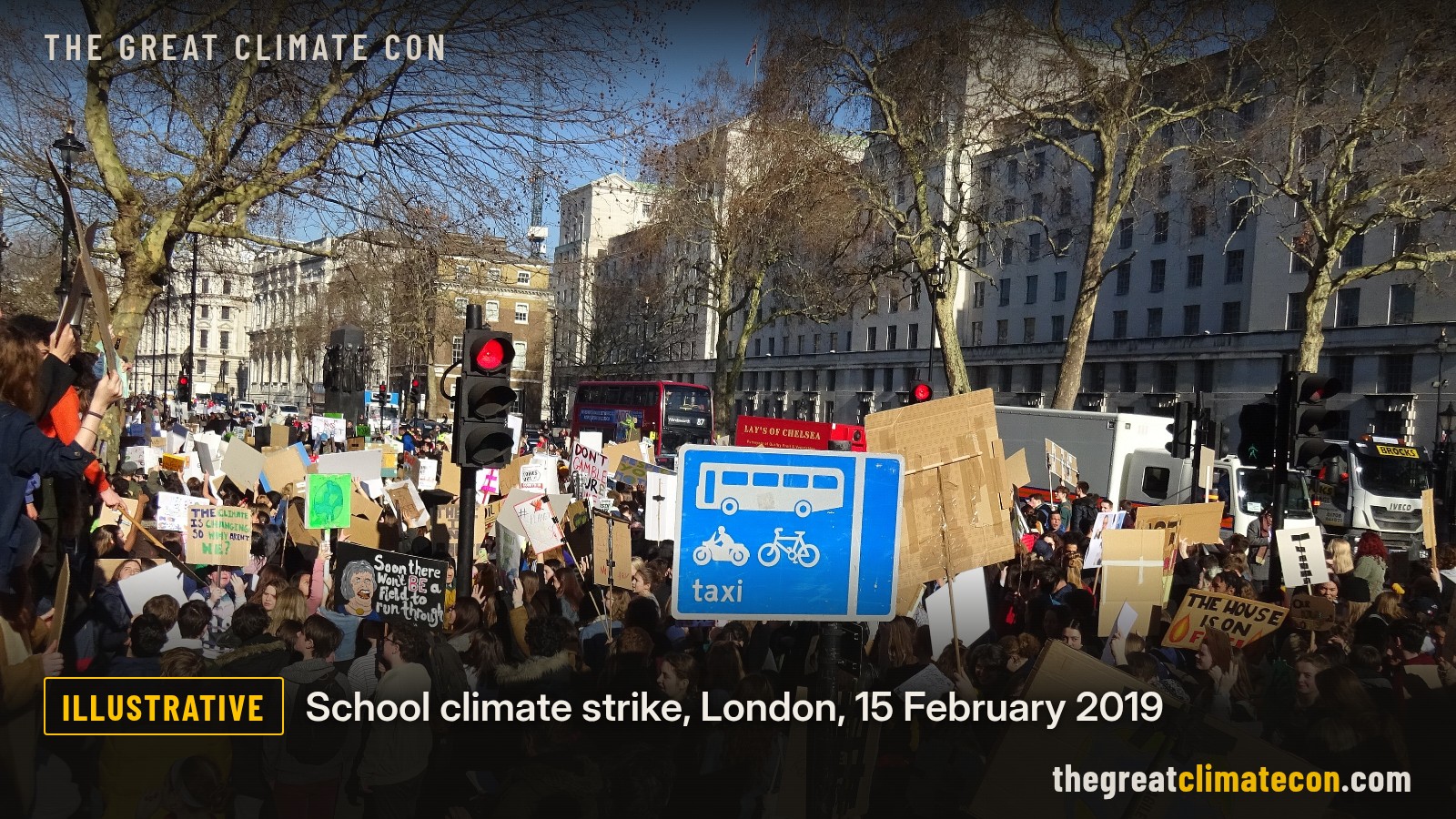
It’s not a one-off either. A KS3 history page, “What did children do in the 2010s?”, holds up Greta Thunberg’s school strike outside the Swedish Parliament as a model. It then asks pupils “What things do you do at home to help slow down climate change?” and “Have you done anything at school about climate change?” The Mail on Sunday reports that a Bitesize video even asks pupils whether they joined Thunberg’s school protests. Nowhere is a child invited to ask whether the strikers had their facts right.
The Same Pattern Elsewhere On Bitesize
Net zero wasn’t the only target. The headline example was a Roblox geography game called Increasing Immigration, part of the BBC’s Planet Planners series for 11 to 14-year-olds. The BBC’s own teacher notes cast players as decision-makers “aiming to attract and support new immigrants”, and tell them to consider “how immigration can contribute to a vibrant, diverse society”.
The scoring tells you everything. According to the Mail on Sunday, which published screenshots, pupils score points for granting an amnesty and lose points for deportation. “Open borders” scores well, while calling it “too radical” scores nothing. A game that rewards amnesty and open borders isn’t teaching geography. It’s teaching a political position.
Meanwhile a Northern Ireland citizenship page, “What is it like to live in a diverse society?”, told pupils: “Some people may think that migrants take jobs from local people. This view likely arises from prejudice.” That’s how you shut a debate down, not how you teach one. Net migration to the UK peaked at more than 900,000 a year in 2023, according to the Office for National Statistics. Worrying about jobs, housing and waiting lists at that scale isn’t prejudice, and the BBC’s own page admitted “pressure on public services such as housing and hospital waiting lists”. The Oxford Migration Observatory, quoted by the Mail on Sunday, says the fiscal impact of migration depends on who comes and on which visa. The children weren’t told that either.
Caught Out, And Now “Under Review”
The BBC’s first response was the usual brush-off. A spokesman told the Mail on Sunday that the BBC doesn’t “accept the characterisation of Bitesize in this story”. Yet when we checked on 23 October, both the net zero page and the Northern Ireland diversity page had been reduced to a single line: “This content is currently under review.” If there was nothing wrong with them, why are they hidden?
The pressure is building. Shadow Education Secretary Laura Trott, who said “The BBC has crossed a line”, has written to Director-General Matt Brittin demanding a review of every Bitesize game that deals with immigration and “other contested public issues” (The Telegraph). Danny Cohen, a former controller of BBC Television, has called for an urgent investigation.
Teach Them How To Think, Not What To Think
Children deserve the whole picture. Tell them CO₂ is plant food: commercial growers pump it into their greenhouses at around 1,000 parts per million, more than double the level outdoors, because it raises photosynthesis by about 50% for most crops (Ontario Ministry of Agriculture). Tell them satellites show a quarter to half of Earth’s vegetated land has greened since the early 1980s, with 70% of that greening put down to rising CO₂ (Zhu et al. 2016, Nature Climate Change; NASA). Tell them what net zero costs and who pays. Then let them make up their own minds.
What a publicly funded broadcaster has no business doing is telling eleven-year-olds which lifestyle to adopt and then handing them a petition. That’s not education. It’s recruitment.
Those pages are now under review. Parents should make sure they don’t come back until they tell children the whole story, and should check what’s on their homework screens in the meantime.
If you want more on how the BBC handles climate numbers, read The BBC Clutch At Straws To Fiddle Heat Death Numbers. And if your kids are coming home with this stuff and you want to have the conversation well, the Climate Con Conversation Mastery Course is free for members.
Discover, Understand, Liberate.

BBC Bitesize And Net Zero: When A Lesson Becomes A Campaign
A BBC Bitesize net zero lesson tells 11 to 14-year-olds they “may need to fly less, eat less meat” and asks if they could petition the council. Is that a lesson or a campaign?
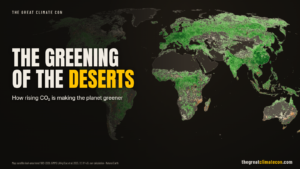
The Greening Of The Deserts: How Rising CO₂ Is Making The Planet Greener
Satellites show a quarter to half of Earth’s vegetated land has greened since the early 1980s, and models put most of it down to CO₂. Why is this never on the news?
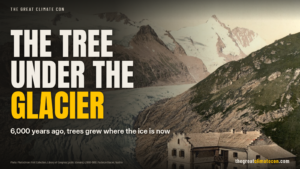
The Tree Under The Glacier: The 6,000-Year-Old Pine The Ice Gave Back
Trees once grew where Alpine glaciers sit today, with far less CO₂ in the air. Climate has always changed, so why is that left out of the story?
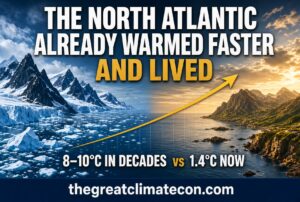
The Younger Dryas Problem for Climate Alarmism, Dispelling The Never Been Seen Before Rate Of Change Myth
We’ve warmed faster before and nature survived just fine. Modern warming should be welcomed!
Net Zero And Renewables Bringing Britain To The Brink Of An Energy Crisis
There is no climate crisis but there is a crisis of evil and stupid working together to destroy the UK in slow motion
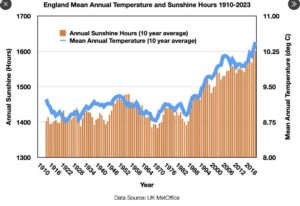
England’s Growing Sunshine: A Welcome Brightening
It’s almost hard to believe but the data is showing a clear increase in sunshine hours