


Local Residents Claim Victory Over Solar Installation
A win for people power against the climate cult
We had a big win on the 4thy July as Country Durham fought off the climate cults attempts to build a vast solar installation. Grass roots resistance like this is probably why the enemy are regrouping to try and figure out to quash the rebellious spirit of the people here. Well, we ain’t giving up without a fight and in fact it does look like the tide is turning we just have to keep putting on the pressure. A war is won with the culmination of many victories in battle. Reform are joining our side but we can’t just rely on them, we have to do the work.
The campaign in County Durham began with residents like Janice Ferguson, who articulated a visceral concern: the solar farm would transform their rural landscape into an industrial zone, complete with fencing, CCTV, and security lighting. This imagery resonated, painting the project as an intrusion on community identity. Activists tapped into fears about losing agricultural land, emphasising the cultural and economic value of farming. By framing the solar farm as a threat to local livelihoods residents were able to defeat the climate cult.
Resident Janice Ferguson said her family would become “prisoners in our own home” if the solar farm went ahead.
“In every direction we will be surrounded by wire fencing, security lighting and CCTV cameras,” she told the Local Democracy Reporting Service.
“We will have to endure at least a year of dust and drilling while 90,000 panels are piledriven into the ground all around us.”
Key to the success was leveraging local political figures. Local MP Grahame Morris amplified the campaign’s message, lending credibility and access to council processes. His involvement shows the power of aligning with sympathetic elected officials who can navigate bureaucratic channels. The campaign also benefited from Reform UK’s vocal presence, which, while polarising, energised turnout at public consultations, like the November 2024 event at Ludworth Community Centre. This mix of grassroots passion and political backing kept pressure on Durham County Council.
Tactically, the opposition focused on tangible impacts—visual blight, restricted land access, and quality-of-life concerns. They submitted 24 formal objections, each grounded in planning regulations, forcing the council to confront practical issues. The rejection decision, reported by The Northern Echo, hinged on these localised arguments, proving that councils can be swayed when community voices are unified and precise.
For us, the lesson is clear: anchor our campaigns in local priorities, build coalitions with influential allies, and frame objections in terms planners can’t ignore. Hare Hill shows that persistence and strategic focus can turn community sentiment into a decisive victory, even against formidable development pressures.
Ongoing battles against solar installations
With the recent win in Durham we can hope this inspires other campaigners across the land as there are multiple fights still happening. Major ones are:
Hempnall, Saxlingham, and Tasburgh, Norfolk
A proposed 2,500–2,700-acre solar farm threatens homes and farmland. Residents oppose compulsory purchases and loss of rural landscapes. No planning application yet; protests continue with the block East Pye Solar group established.
Lincolnshire (Multiple Solar Farms)
Lincolnshire faces numerous solar farm proposals, including a 1,270-hectare project at Cottam. Residents oppose farmland loss and visual blight. Opposition continues against national net-zero priorities.
Suffolk (Solar Farms and Infrastructure)
Honourable mention for Northamptonshire
STAUNCH campaigners opposed a solar farm scheme threatening rural landscapes. Concerns included industrialisation of countryside. In 2025, residents won a planning appeal, halting the development and preserving the local environment.
For a full map showing nearly all the solar installations around the country, click here,
Continue Your Learning

36-Year High: They Said The Great Barrier Reef Was Dying. Then It Recorded The Most Coral Since Monitoring Began
In 2022 Australia’s official reef monitors recorded the most coral on the northern and central Great Barrier Reef in 36 years. Ten years earlier, the forecast was 5–10%.
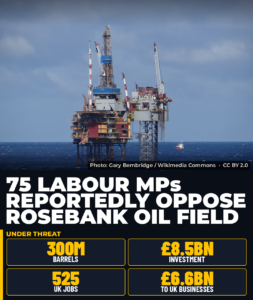
75 Labour MPs Reportedly Want 300 Million Barrels Of British Oil Left In The Ground. So We Just Import It Instead?
A reported 75 Labour MPs have signed a letter against Rosebank, around 300 million barrels of oil west of Shetland. Stop it and Britain loses £8.5bn of investment and 525 UK jobs, and still buys the oil, just from abroad.
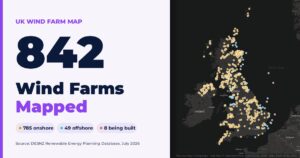
Wind Farm Map UK
Every operational UK wind farm on one map: 834 sites and 31,519 MW (31.5 GW) from the government’s DESNZ Renewable Energy Planning Database, July 2026 extract.
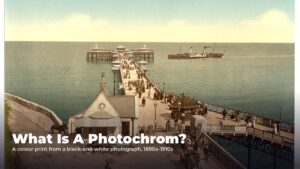
What Is A Photochrom?
A photochrom is a colour ink print made from a black-and-white photograph, produced and sold mainly from the 1890s to the 1910s. That is why these views are such useful dated evidence of historic coasts.

17.2 Million Trees, 8,611 Hectares, And That’s Only Public Land
Forestry and Land Scotland recorded 8,611 hectares felled for wind farms on Scotland’s national forest since 2000, about 17.2 million trees. Private forests are not included.
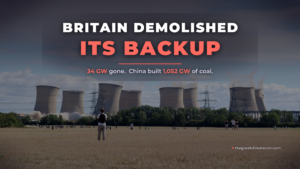
Britain Demolished Its Backup: 34 GW of Reliable Power Gone While China Built 1,052 GW of Coal
Britain closed 33.9 GW of coal and oil plant from 21 stations now demolished, being pulled down, or otherwise taken off the grid. In the same years China commissioned 1,052 GW of new coal, about 31 times as much. When transmission-metered wind averaged just 0.60 GW on 8 November, the grid leaned on gas and paid emergency prices.
Track The Cost Of Net Zero
Stay ahead of the transition with real-time cost monitoring and optimization tools.
Access Cost Trackers →