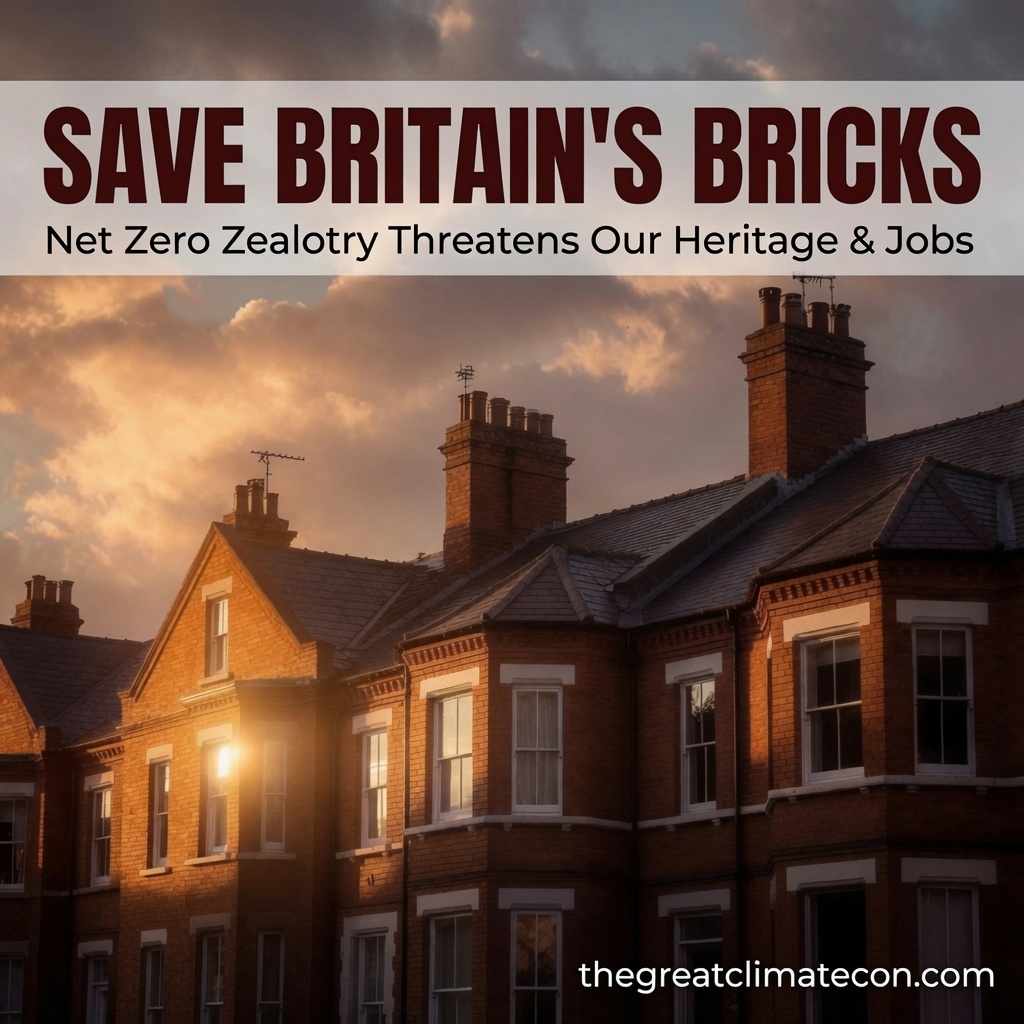
The mechanism is simple and dishonest. Building standards now rest on carbon calculations that assume most brick structures will be demolished after only sixty years. This premise is demonstrably false. We have hundreds of thousands of brick houses built before the First World War still standing solid and occupied. Victorian terraces, Edwardian villas and even older brick buildings continue to serve their purpose with quiet dignity. Bricks do not need constant replacement. They endure. They can be repaired, adapted and passed down through generations.
The climate campaigners and the officials who follow them know this, yet they persist with the sixty-year fiction because it allows them to portray brick as “high carbon” and therefore undesirable. It is a classic piece of narrative management: take a kernel of observable fact — that brick manufacture uses energy — and wrap it in the larger falsehood that we must treat carbon dioxide as a dangerous pollutant to be minimised at every turn. We should not be measuring or regulating building materials on this basis at all. Carbon dioxide is the gas of life for plants. Higher levels in the atmosphere have already contributed to a greener planet. A modestly warmer world is not the existential catastrophe the cult claims; human beings have always adapted and prospered through climatic shifts. And personally, I prefer the warmth so bring on a bit of global warming!
By baking this false assumption into planning rules and sustainability assessments, the net zero apparatus systematically disadvantages durable, low-maintenance materials. It rewards alternatives that may score better on day one but often require more frequent repair, replacement or even wholesale demolition later. That is not progress. It is expensive short-termism dressed up as virtue.
The public sees through it. When ordinary people are shown images of different building types, brick consistently emerges as the clear favourite, by margins of sixty per cent or more, across every age group, region and political persuasion. People want solid, attractive homes they can pass on to their children. They do not want flimsy, high-maintenance structures dictated by distant targets and imported ideologies.
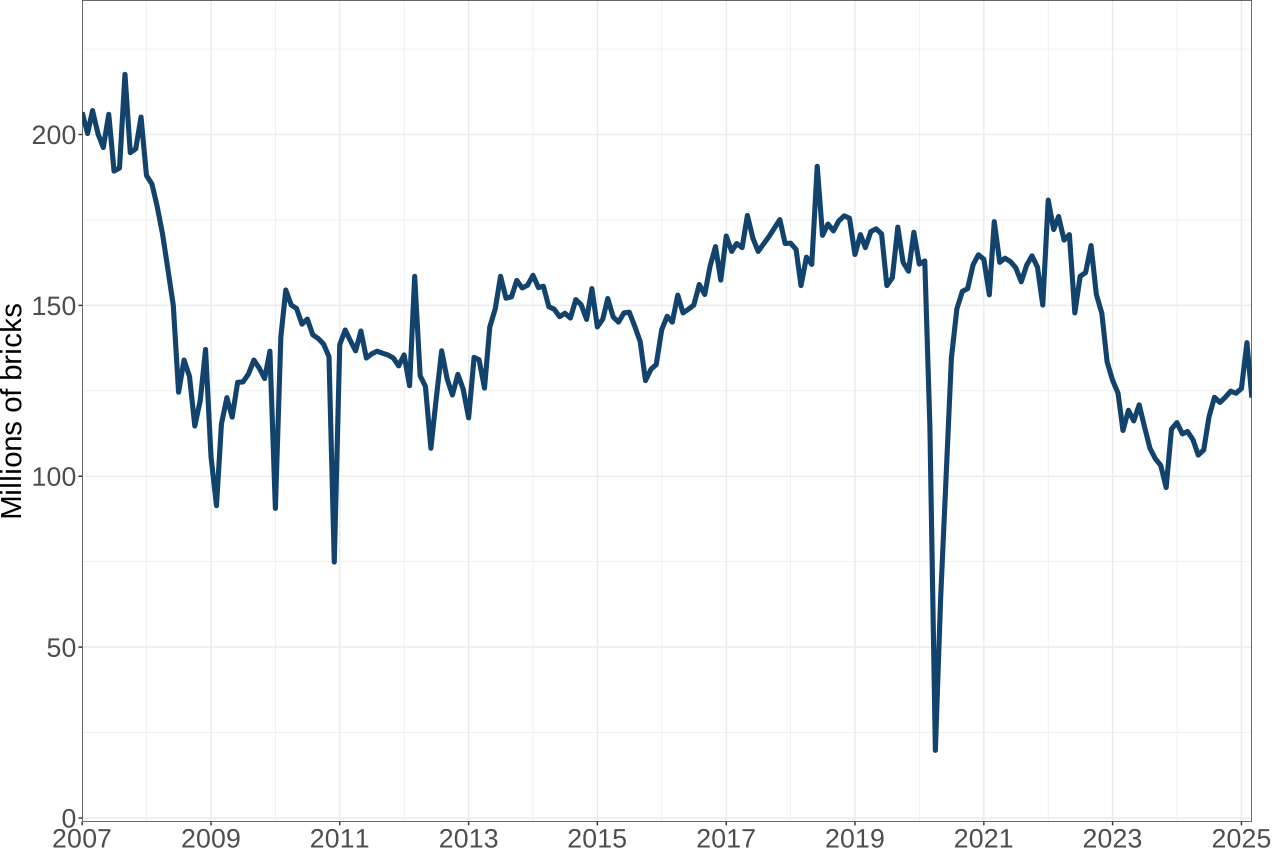
If the present trajectory continues, Britain will import more of its bricks, further weakening domestic manufacturing, damaging the trade balance and exposing supply chains to foreign disruption. At the very moment we need to build more homes, we are making it harder to build the homes people actually want and that will last. The push towards intermittent and expensive renewable energy sources only adds to the pressure on energy-intensive but vital industries such as brick making. The result is lost jobs, lost skills and lost heritage, all in the service of an agenda that offers no measurable environmental gain.
This is not an argument for adjusting the rules or refining the calculations. The entire framework of carbon accounting for everyday materials and construction is part of the problem. It turns practical decisions about what works, what lasts and what people like into ideological score-keeping exercises. Britain did not become a great building nation by obsessing over arbitrary emission ledgers. We built with materials that proved themselves over time.
It is time to defend the brick industry without apology. We must reject the net zero strictures that are quietly dismantling British manufacturing and our capacity to create enduring places. We should champion the right to build with proven, popular and long-lasting materials. Homes and neighbourhoods that stand for generations are not relics of the past; they are the foundation of a confident future.
The slow erosion of this industry is not inevitable. It is the predictable outcome of policies that place abstract global targets above the concrete interests of British workers, British communities and the British landscape. Common sense and national interest demand we change course before more factories close and more skills are lost forever. The choice is straightforward: continue sacrificing real, tangible assets to an unproven ideology, or restore priority to durability, beauty, jobs and the right of British people to shape their own built environment with materials that have served us faithfully for centuries. Because if we do not stop the climate cult, they will destroy, restrict and control every single sector of society under the banner of lowering CO2 emissions.
Bricks built Britain. They can build its future, if we have the resolve to protect them from the climate cult’s destructive agenda.