CBAM - Yet Another Carbon Tax Set To Increase The Cost Of Living In The UK Even More

The onslaught of the climate cult destroying our way of life to ‘save’ our way of life continues

The climate cult via the Labour party is set to do even more harm by seeking to impose a new border tax on imports of steel, aluminium, cement, fertilisers and hydrogen. Called the Carbon Border Adjustment Mechanism, or CBAM, it begins on 1 January 2027. Its stated goal is to stop “carbon leakage”, the idea that UK factories close and production moves abroad because of high domestic carbon prices under the UK Emissions Trading Scheme. In reality, it is another layer of self-harm in the name of net zero, a political target that does not have to be met and that will achieve nothing for the planet while raising costs for British businesses and households.

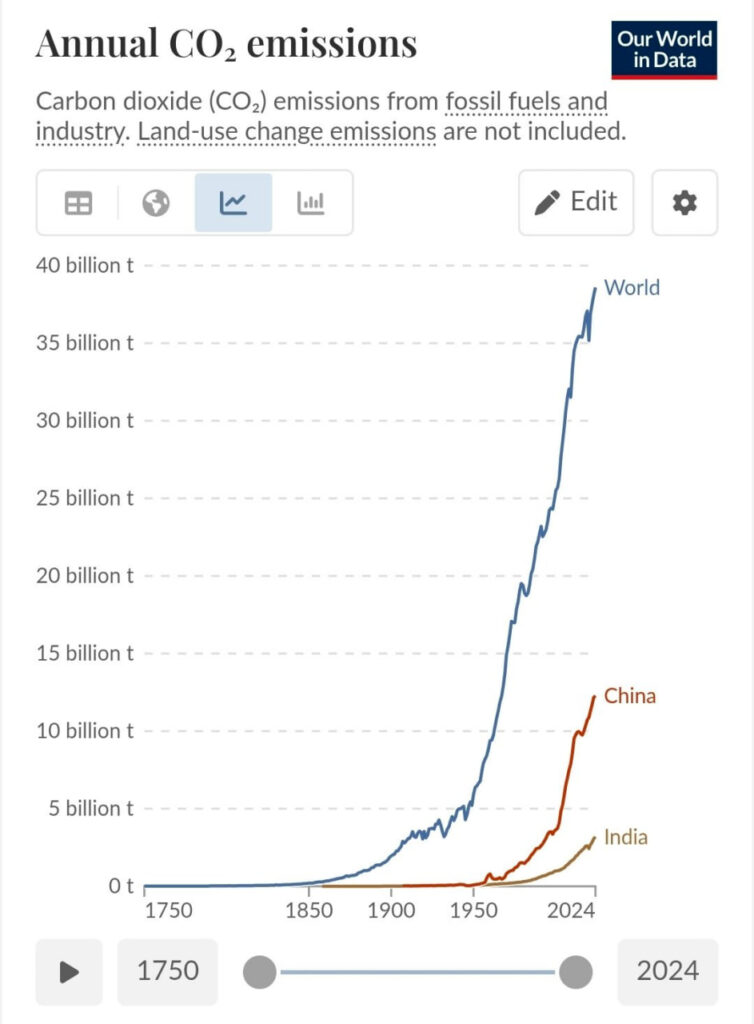
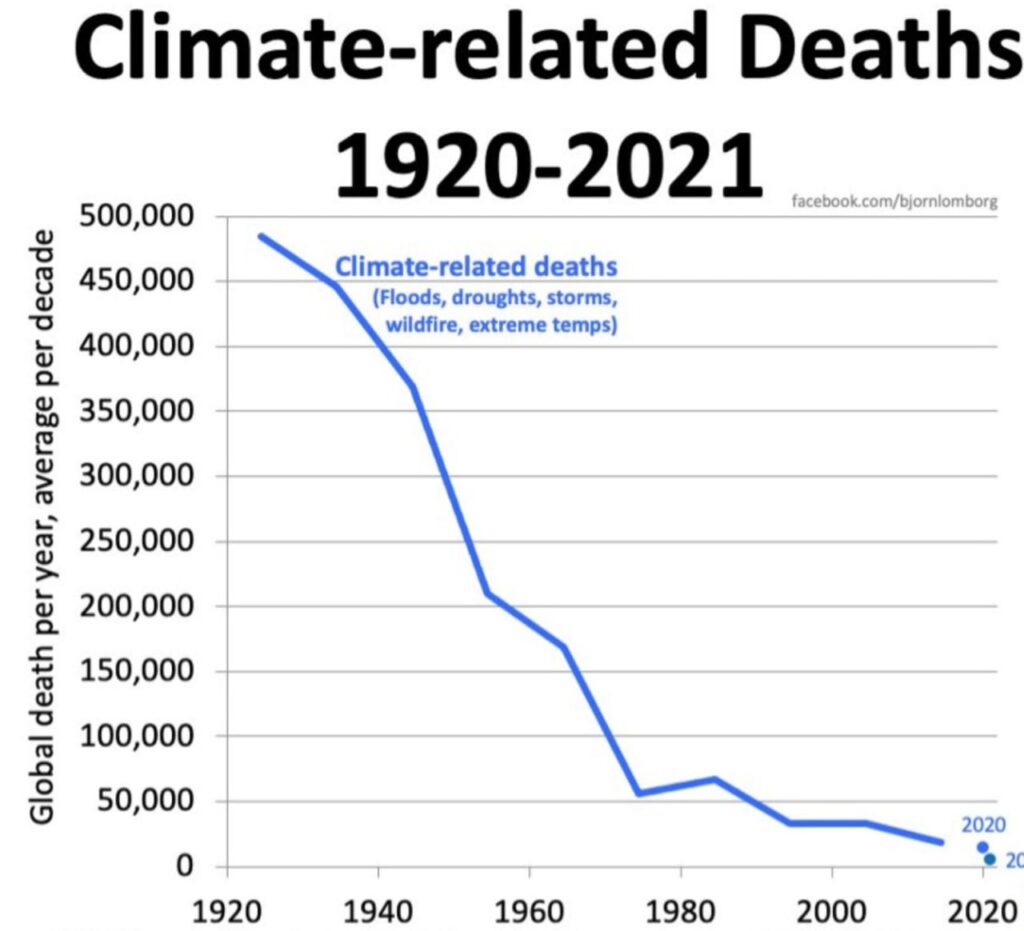
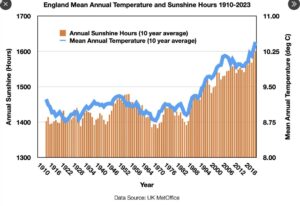
The UK accounts for less than 1% of global CO₂ emissions. China alone emits over 30%. India, Indonesia, Vietnam and many others are still building coal plants and increasing energy use to lift their people out of poverty and quite rightly so. Global hydrocarbon CO₂ emissions hit record levels in recent years and are still rising. The world is not following Britain’s lead. It is steamrolling ahead with whatever energy is cheapest and most reliable. Britain’s sacrifices change the global atmospheric concentration of CO₂ by a rounding error. As can be seen in these graphs

We need to educate the people on the truth about CO2 and the climate as quickly as possible so we can vote in the right party and stop the destruction of the UK.

CO2 Is Plant Food and the Planet Is Getting Greener Because of It

Carbon dioxide is not a toxic pollutant to be eradicated. It is the essential raw material for photosynthesis. Plants use it to grow. NASA satellite data over decades shows that the Earth has greened dramatically, an increase in leaf area equivalent to two continents the size of the United States. Studies attribute roughly 70% of that greening to rising atmospheric CO2. More CO2 means faster plant growth. 

What the CBAM Actually Does

The CBAM is not a gentle nudge. It is a tax. Primary legislation sits in Part 5 of the Finance Act 2026. It charges importers on the emissions “embodied” in specified goods when those goods enter the UK market.

Scope from 2027: Aluminium, cement, fertilisers, hydrogen, and iron & steel. Specific commodity codes define exactly which products count. Glass and ceramics were dropped from the initial list after analysis showed lower risk. Only direct (process) emissions are covered at launch. Indirect emissions, such as those from the electricity used in production, are delayed until at least 2029.

How the tax is calculated: Embodied emissions (in tonnes of CO2 equivalent) × the UK CBAM rate minus any carbon price relief for taxes or Emissions Trading Scheme (ETS) costs already paid overseas.

The rate is sector-specific and reset quarterly. It is derived from the average UK ETS auction price in the previous quarter, adjusted downward to reflect the free allowances UK producers still receive. As those free allowances are phased out (starting around the same time as the CBAM), the effective CBAM rate automatically rises. This is a built-in escalator for higher taxes on imports.

Importers can use actual verified emissions data from overseas producers or government-set default values. Verification must meet strict standards (accredited verifiers, site visits, ISO norms). Relief for overseas carbon prices requires evidence that the foreign scheme is “qualifying” and that the price was actually paid on those specific emissions. Multiple schemes can be claimed, but everything must be documented and converted to GBP using HMRC exchange rates.

Administration and compliance:

The tax point is generally when goods are released into free circulation or first enter the UK.

– Businesses must register with HMRC if they import (or expect to import) £50,000 or more of CBAM goods in value over a 12-month period. There are forward-looking (next 30 days) and backward-looking tests. Below the threshold, most small importers are exempt from registration and returns.

– First accounting period: the whole of 2027. First return and payment due 31 May 2028. From 2028, periods become quarterly.

– Records must be kept for six years. Penalties apply for late registration, inaccurate returns, or failure to pay.

– Roughly 10,000 businesses are expected to be directly affected. Compliance involves new systems, training, data collection from suppliers, and dealing with HMRC.

The government expects modest revenue,  on the order of £140–180 million per year initially, but the real cost will be higher import prices passed through supply chains, plus the administrative burden on thousands of firms.

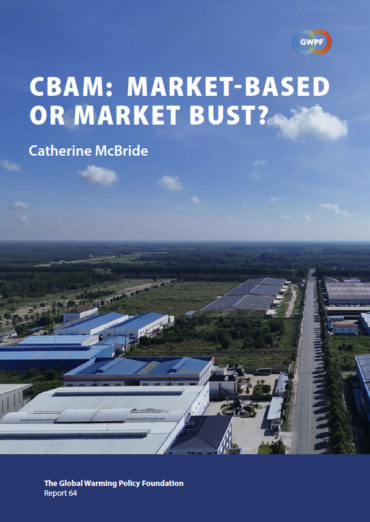
Catherine McBride from the Global Warming Foundation has written a detailed report with a short video summary below. Read the full report here.

How It Uses Flawed Data to Justify Ever-Increasing Costs

The mechanism rests on contested assumptions and bureaucratic discretion dressed up as precise science.

Default emission values are set by the UK government. These are not neutral measurements of real-world production in exporting countries. They are policy tools. When actual verified data is expensive or difficult to obtain, especially from smaller suppliers in complex global chains, importers will default to paying the government figure. If that figure is set conservatively high (to “protect” UK industry or maximise the adjustment), the tax is inflated by design.

The benchmark itself, the UK ETS price, is not a pure market signal of the “social cost of carbon.” It is a created market with caps, free allocations, interventions, and political targets. Using it as the yardstick for imports assumes this artificial price is the correct one. As domestic free allowances decline to make the UK ETS “more effective,” the CBAM rate rises in lockstep. The policy therefore contains a ratchet: tighter domestic rules automatically mean higher border taxes.

Carbon leakage risk is treated as self-evident and large enough to justify the whole apparatus. Real-world evidence on leakage rates is mixed and often lower than alarmist models predict, especially once trade patterns, technology differences, and existing policies in exporting countries are considered. Of course this is all still forgetting we want more CO2 and all this endless wasted admin time counting carbon. The CBAM also ignores that many imports already come from jurisdictions with their own carbon costs or cleaner processes than the default values assume.

Once the system is running, scope expansion is almost inevitable. Indirect emissions will be added. It’s the perfect tool if the agenda is to ever increase taxes and make the people of the UK suffer and more poor in the process. More sectors will be reviewed. Rates can be adjusted upward. Compliance complexity will grow. This is how “climate policy” typically works: initial measures create the infrastructure and precedent for bigger ones, justified by the same models that have repeatedly overstated near-term catastrophe while underplaying adaptation and innovation. Give them an inch and they take a mile!

The result is not accurate carbon accounting. It is a mechanism for transferring costs from political targets onto importers, manufacturers, builders, farmers and ultimately consumers, all while global emissions continue their trajectory driven by far larger players. 

The Economic Damage: Destroying Competitiveness and Living Standards

Steel, cement, aluminium and fertilisers are not luxury goods. They are foundational inputs.

– Higher steel and cement costs slow housebuilding and infrastructure at a time when Britain already struggles with both.

– More expensive aluminium hits packaging, transport, aerospace and consumer goods.

– Costlier fertilisers raise farming expenses, squeeze margins and feed into food price inflation.

– Manufacturers using these materials face higher input costs than competitors in countries without equivalent border taxes.

These costs do not stay at the border. They ripple through the economy. Construction becomes more expensive. Manufactured exports become less competitive. Supply chains reconfigure, often moving activity away from the UK. Compliance costs alone, new reporting systems, verification, legal advice, will run into tens or hundreds of millions across affected businesses, with the burden falling hardest on smaller and medium-sized importers who cannot easily absorb or pass on the expense.

Official assessments talk about “limited negative impacts” and some revenue. They underplay the cumulative effect of higher material costs on an already strained economy. Britain has already seen significant deindustrialisation in energy-intensive sectors. The CBAM adds friction exactly where remaining industry needs relief. It protects a shrinking domestic base with one hand while taxing the inputs it needs with the other.

Living standards fall when the basics, housing, food, manufactured goods, infrastructure, become more expensive relative to wages. This is not abstract. It is higher mortgage costs from expensive building materials, higher grocery bills from fertiliser costs, and fewer well-paid industrial jobs. All in the name of trying to appease the climate cult in their destructive fantasy of a net zero Britain.

Net Zero Does Not Have to Happen

The 2050 net zero target is a political choice, not a law of physics. The climate has always changed. Current warming sits within the range of natural variability when viewed over longer timescales, and the most extreme projections have repeatedly failed to materialise on schedule. Societies have adapted to far larger shifts in the past like the medieval warm period.

The rational response to any genuine climate risk is resilience, adaptation, technological progress (including advanced nuclear), and continued economic growth that makes societies wealthy enough to handle challenges. Punitive taxes on essential materials while the rest of the world increases emissions is not resilience. It is performative decline. Just like how we achieved a 99% reduction in climate related deaths by improving our socities.

Britain can cut its already tiny share of emissions to zero tomorrow and the atmospheric trend would be virtually unchanged. The CBAM will not alter that reality. It will simply make Britain poorer, less competitive, and more dependent on imports that are now artificially expensive.

Fight Back Now!

The UK CBAM is sold as smart policy to level the playing field. In practice it is a complex, compliance-heavy tax that relies on government-set default values, an artificial domestic price benchmark, and verification hurdles that will push most trade toward higher charges. It raises costs on the building blocks of modern life while the countries that actually drive global emissions continue growing.

More CO2 has already made the planet greener. Britain’s marginal emissions do not dictate the global outcome. Net zero by 2050 is not an immutable necessity. The CBAM is wealth destruction presented as virtue. Britain should scrap it, focus on affordable reliable energy and competitive industry, and stop pretending that symbolic self-harm changes the trajectory of a world that has other priorities.

We have I Love CO2 stickers available here for you to do your part in spreading the truth in your town.

Thanks to the support of the community I’ve now purchased this board and within a week or so will be hitting up the streets to wake up the people. Should be fun. Watch this space!

This Story Is Funded By Readers Like You

Climate Common Sense

The Beginners Guide To The Climate Con

Continue Your Learning

📊

Track The Cost Of Net Zero

Stay ahead of the transition with real-time cost monitoring and optimization tools.

Access Cost Trackers

Leave a Comment

🛡️

Help defeat the Climate Con

Become a member for just £2.99 a month and get full access to exclusive tools, content and community.

Cancel anytime • Instant access

Secure checkout • Stay as long as you like